Echica: National Artist Dr. Mojares blazed the trail for others to follow
Homily on the occasion of the funeral mass of
Dr. Resil Mojares, National Artist
By Fr. Ramon Echica
(Philippine National Artist for Literature Dr. Resil Mojares was laid to rest in Cebu City on September 12, 2026 with the highest honors given to a luminary in history, Literature, and communications. Fr. Ramon Echica, a theology professor at the Seminario Mayor de San Carlos and an award-winning book writer, paid tribute to Mojares in his homily.)
Cebu City - This genius whose remains we will soon send to his final resting place can be called by different names: scholar from the margins, Cebu’s foremost scholar. I like the term I read from another scholar of Cebuano history, Michael Cullinane. He calls Dr. Resil the “indigenous kinaadman.” I do not have any pretension of being poetic, and so the title I would suggest is rather clumsy, “the cerebrum of Cebu.”
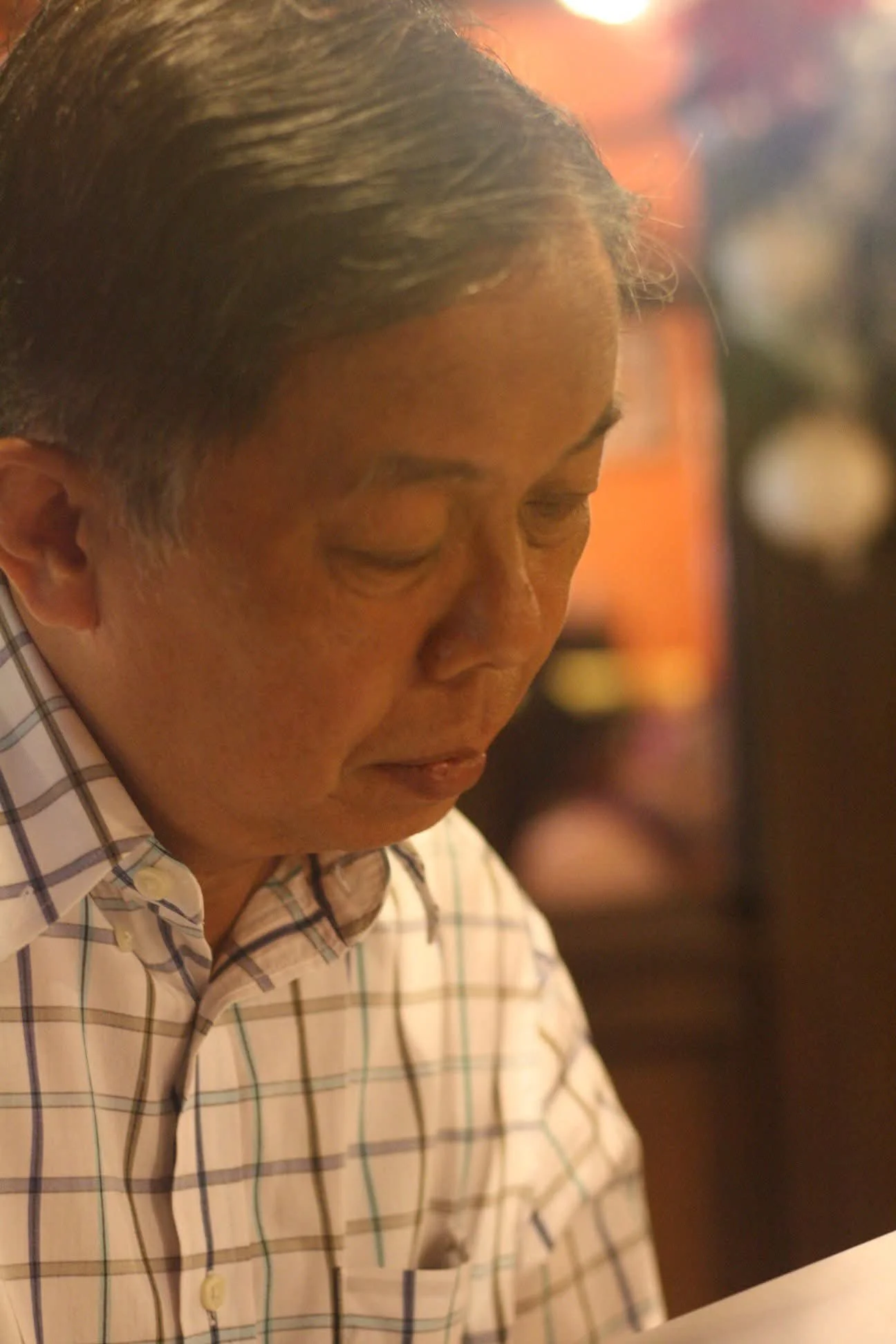
Scholar Michael Cullinane called Mojares “indigenous kinaadman (wisdom).”
Of course, those who are familiar with the works of Dr. Resil could immediately spot the the allusion to his classic Brains of the Nation. In this book, our beloved Dr. Resil traces the formation of modern knowledge in the Philippines through the works of pioneering Filipino intellectuals, namely Pedro Paterno, Trinidad Pardo de tavera, and Isabelo de los Reyes. But I dare say that what Dr. Resil did to the formation of our knowledge of Cebu can be even greater than the contributions of these intellectuals who were the objects of his research.
Indeed, it is difficult to surpass the contribution of Dr. Resil Mojares to the formation of knowledge of Cebuano culture. But being a real scholar, he would not mind that his contributions would be surpassed in the future. Anything of importance to the understanding of Cebu, Resil has written about.
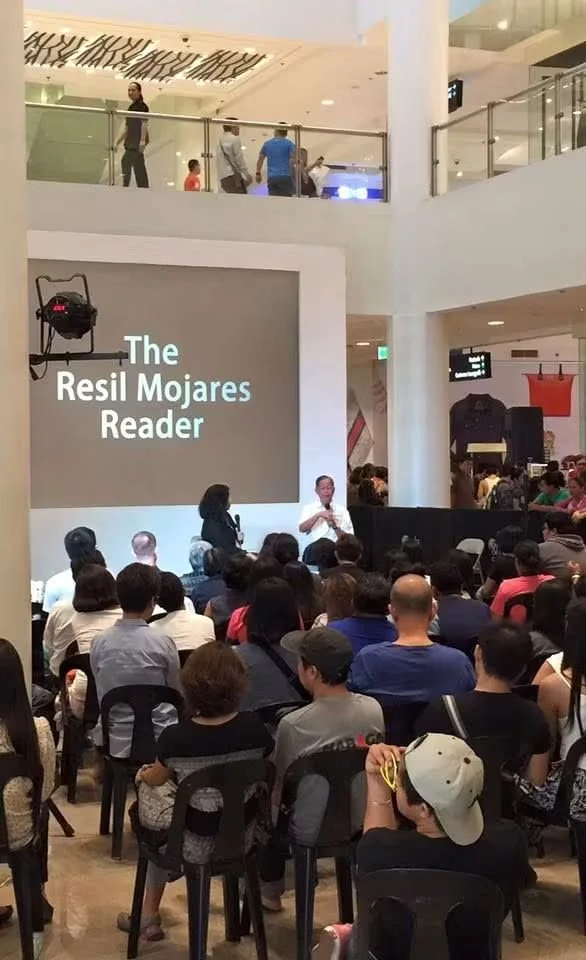
Mojares in 2015 during the launch of The Mojares Reader.
He has written anything under Cebuano skies: pre-Hispanic Cebu, the encounter between Magellan and Lapulapu, Pedro Calungsod, the Santo Nino devotion, the Osmenas, Cebuano literature, Our Lady of Guadalupe, Vicente Sotto (his latest book is a biography of this Cebuano maverick senator after whom our biggest public hospital is named), the University of San Carlos and Seminario-Colegio de San Carlos, etc.
Even some topics which non-historians may find obscure have not escaped the attention of Prof. Resil. An example would be how Cebuanaos perceived the local migration to Hawaii, decades before the start of the World War. (Who would have thought that this is an interesting topic? But anything that Dr. Resil touched would be made interesting.)
He has also written about what a community which is now a periphery which is Valladolid, Carcar. (But his point is precisely that there was a time when this was the center and not the periphery.) He has promoted a greater understanding of Cebuano language or Cebuano literature.
The problem is, in his own words, “This is essentially a problem of power. Cebuano has historically been relegated to a position subordinate to Spanish, English, and Tagalog. The concentration of state power and media resources in a Tagalog-speaking primate region and the promotion of Tagalog region as the base for national language…have marginalized regional languages like Cebuano.”
But then Prof. Resil would add in the same essay, “perhaps a more immediate imperative is not to bring Cebuano texts to the attention of non-Cebuanos, but to that of Cebuano readers themselves.”
I am even tempted to say that anything pertaining to Cebu that Dr. Resil Mojares has not written about maybe does not deserve to be known. But I will not say it since Dr. Resil would be the first to voice his objection. A real scholar would know that there are still many things that need to be explored by further research.
For example, Vicente Rafael in his work, “Contracting Colonialism” has extensively shown how Tagalog translations were actually forms of resistance to Spanish colonization. Reynaldo Ileto has his own contribution on how the the pasyon, written in Tagalog, has contributed to the formation of a revolutionary consciousness. But all these works are all Tagalog-centered. We are still waiting for a Cebuano scholar to write their Cebuano equivalents. But Dr. Resil has blazed the trail for other scholars to follow.
How do we relate these thoughts to what we are doing now, praying for the eternal repose of Dr. Resil and sending him off to the great beyond?
It is my conviction that we just do not enter the kingdom of God. In a real causal sense, we help in the ongoing construction of that kingdom.
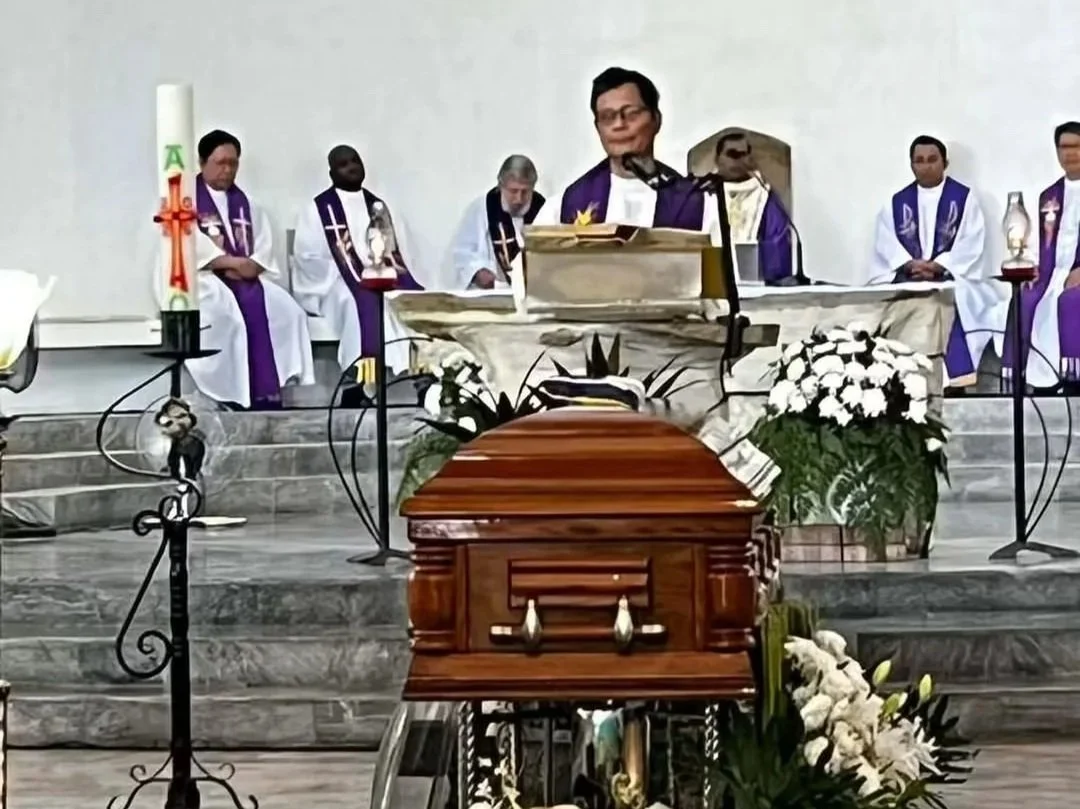
Fr. Echica: The writings of Resil, the love he gave to his family and his disciples, his dedication to his craft, are his own contributions to the ongoing construction of the reign of God. (All photos from Facebook)
To explain this thought to my students, I ask them “what would heaven be without the plays of Shakespeare? Without the music of Beethoven, without the films of Spielberg, etc? They cannot be rendered useless just because there is another world beyond this world. If all these works will be left behind here on earth, and all we have to do is to be good in order to enter heaven, then we are actually reducing earthly existence to an entrance exams to heaven.
The writings of Resil, the love he gave to his family and his disciples, his dedication to his craft, are his own contributions to the ongoing construction of the reign of God.
Dr. Resil, rest in peace. You have done your share. Others will continue.#