Dr. Resil Mojares: The professor who advised me to be a journalist
A tribute to a great but humble writer, historian, and professor
National Artist for Literature Dr. Resil B. Mojares (1943-2026)
By Marivir R. Montebon
New York - I may perhaps be a political propagandist if I hadn't fully pivoted as a journalist - a decision that I give credit to Dr. Resil Mojares, who was then the editorial adviser of the newly resurrected student publication Today’s Carolinian of the University of San Carlos in 1983.
Unbeknownst to Dr. Mojares himself, Philippine National Artist for Literature in 2018, he quite cemented that decision in my teenage years. He helped revive Today’s Carolinian after it was closed during Martial Law in 1972, as part of the screening committee of applicants and as our editorial adviser.
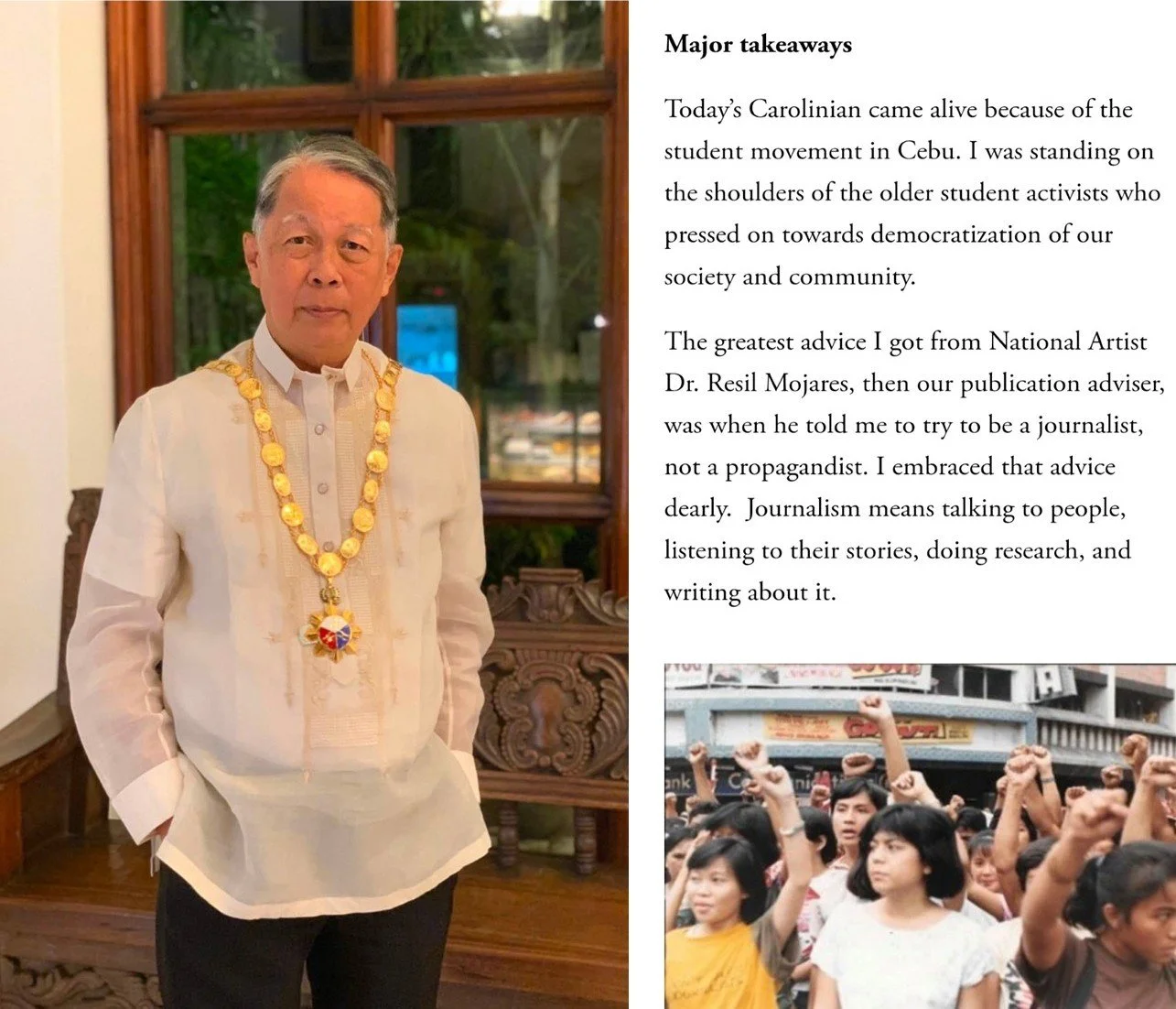
Philippine National Artist for Literature Dr. Resil Mojares, my professor and editorial adviser who advised me to take the road of journalism and rigorous research.
For context, the 1980s was a tumultuous time in the Philippines. The political and economic excesses of the overstaying Pres. Ferdinand Marcos Sr. have led to its own ruin. Then came the last straw - the assassination of Sen. Benigno Aquino Jr., and Filipinos deposed Marcos in a non-violent people power uprising which stunned the world. Later on, Germany unified and the USSR disbanded, among many other upheavals. That was the democratization of the world in the 1980s. In Cebu, we saw that as the coming back of student publications and organizations to reclaim the lost democracy.
The 1980s was Dr. Mojares’ resurrection too, after being curtailed as a writer during Martial Law. In one of those editorial meetings, he told me “to be a journalist and not a propagandist.” I was amazed, and inspired. As an editorial adviser, he meant for me and for us in the student paper to deepen our writings through rigorous research and not fall into sloganeering.
That one conversation was the hallmark of my path as a writer. I have been blessed to have such prompt guidance. The Today’s Carolinian experience gave me four vibrant years of hands-on campus journalism and press management, a leadership apprenticeship, I should say. From news reporting and feature writing to paper management, and finally being the first female editor-in-chief. Dr. Mojares was there, watching us, I suppose.
Dr. Mojares was also my professor in English Literature in USC. Admittedly, he bored me a little bit with his monotone, but I did bask in the magical richness of his written work and analysis of society. For a curious teenager then, it was a real treat.
Dr. Mojares founded the Cebuano Studies Center which has, perhaps, the richest collection of Cebuano and Visayan literary and historical materials to date. I would soak in for hours in that resource center, marveling at the rich information materials that many in Cebu have never known.
In college, I would often see him in a local coffee shop, quietly reading manuscripts and sipping coffee. I thought that was a cool way of life and told myself, perhaps, I will do that someday too - drink coffee and read lots of papers.
Years have passed since I graduated from USC. Life happened. It was always heartwarming seeing Dr. Mojares being interviewed on social media for his wisdom, and the consistent coolness and humility along with such brilliance.
About a year ago, I spoke before Communications students of the University of the Philippines Cebu College about Martial Law in the Philippines. Once again, I had recounted to my young audience about Dr. Mojares' influence on me as a writer.
There's always this nagging voice in my head to interview him for my podcast, seeking the help of good friend and Today’s Carolinian pioneering editor-in-chief Dr. Jojo Bersales to bridge that opportunity. Too late now. He's gone, quite quickly, a day after celebrating his 83rd.
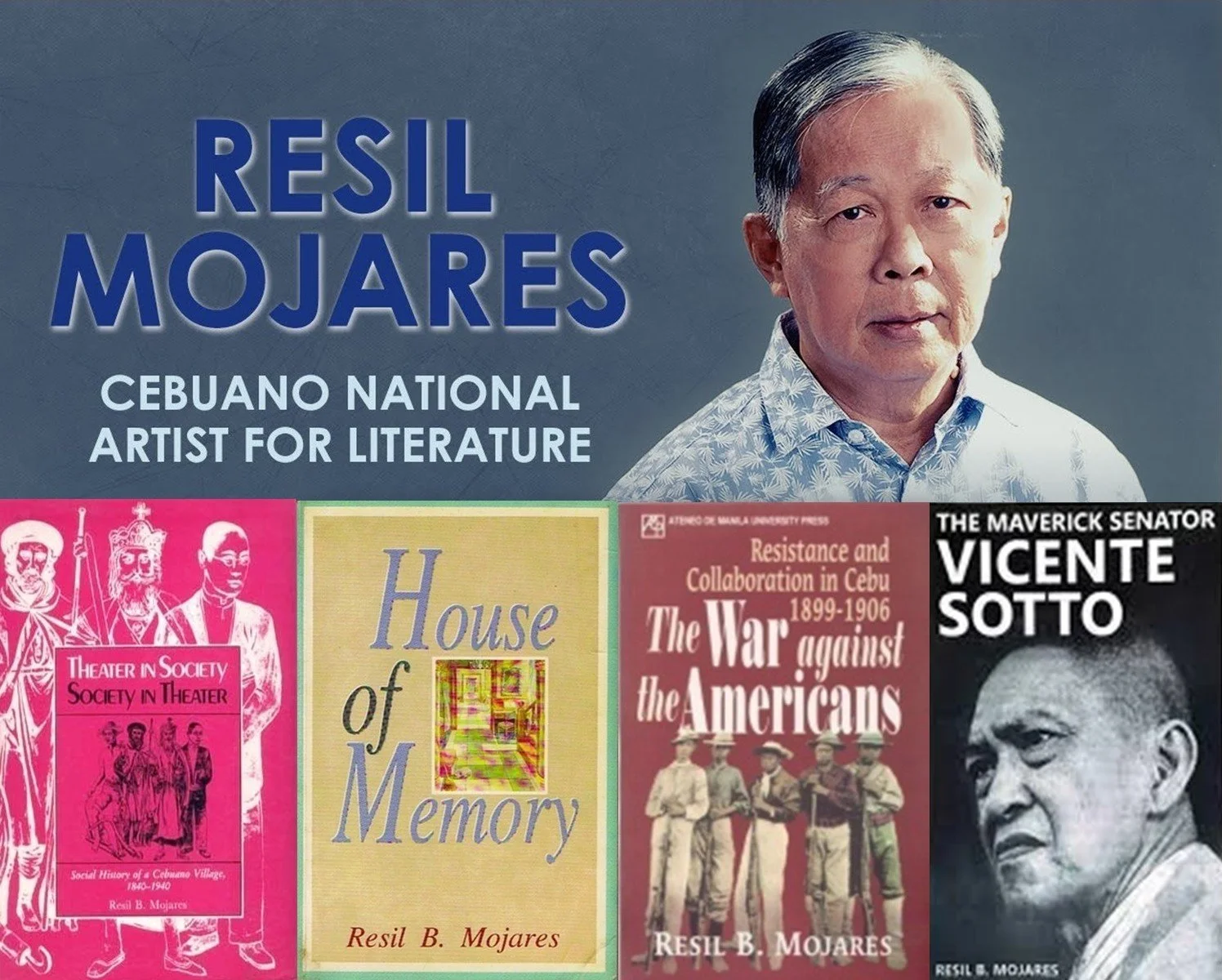
The Mojares reader is an eyeopener about society and a celebration of the magic of his written word.
But Mojares has always been larger than life. His socio-cultural observations and literary magnificence is his earnest work, and from that, he reaped respect.
His book, The War against the Americans, introduced me to my own roots, the unknown story of the struggles of a relative, Gen. Arcadio Maxilom, leader of the Katipuneros after the downfall of Leon Kilat.
This exemplary Mojares book inspired me to go out of my way to interview my father and uncles, as well as relatives whom I have not previously known, just to piece together a Maxilom memorial firsthand from within clan members.
The War Against the Americans, painstakingly researched from the Library of Congress in Washington, DC, was the first solid research material I read on the dark period of the Spanish and American colonial transition. It was an eye opener.
Many other Mojares’ works that illuminated me were the House of Memory and Theater in Society, Society in Theater, where I appreciated the erasure of the local art linambay in Carcar with the advent of American colonialism. His award-winning biographies of Sergio Osmena Jr. (The Man who Would be President, Serging Osmena) and Sen. Vicente Sotto (The Maverick Senator Vicente Sotto) gave me a vivid description of Cebu’s political history.
His columns on Sunstar Daily ‘Footnotes to an Absent Text’ were delightful as they provided clarity on political and daily life.
Unable to secure a recorded conversation with Dr. Mojares in this day and age is a personal loss for me. I wonder what he would have said about the worsening socioeconomic and political times; how could we get out of this quagmire. #

Awesome Media, Ltd.’s media partner in Las Vegas, Nevada