The Right to Development of individuals and nations remains illusory, compounded by AI
By Dr. Marivir Montebon
New York - The tedious process of creating and implementing programs for international conventions on localities is among the slowest human undertakings worldwide. As life happens for the better or worse, inside the quarters of the UN, discussions on issues continue to be diplomatically slow until consensus is reached.
This is true for the convention on the Right to Development which was ratified in 1986. Forty years later, at the recently concluded three-day UN conference on Expert Mechanism of the Right to Development, stakeholders tackled the challenges of Artificial Intelligence (AI) as an additional dilemma in realizing people’s right to development.
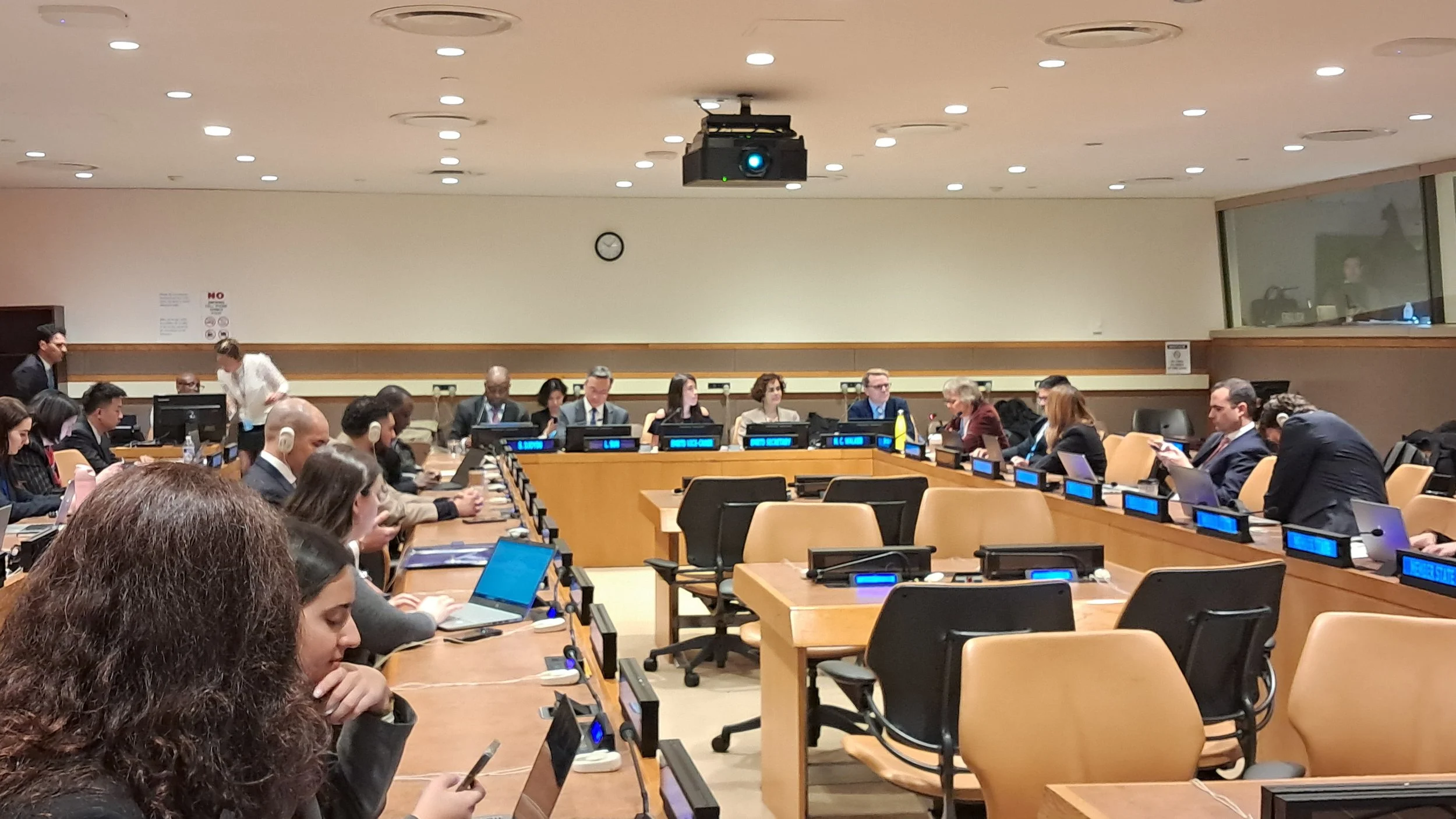
The Expert Mechanism of the Right to Development Conference at the UN New York Hq. April 21-24, 2026
The Expert Mechanism, an annual undertaking in New York and Geneva, provides the Human Rights Council with “thematic expertise on the right to development in searching for, identifying and sharing best practices with Member States and promotes the implementation of the right to development worldwide. It was established by the HRC in 2019.”
Moral imagination in the time of AI, anyone?
The pervasive threat of AI on data theft and manipulation and cultural piracy have been acknowledged by the EMRTD in this day and age.
Dr. Nathan C. Walker, founder of the AI Ethics Lab at Rutgers University, spoke during the April conference and introduced “moral imagination” as an applied design practice: the ability of developers, regulators, and investors to see themselves in a moral dilemma involving AI to understand competing points of view.
This approach looks at AI not as a tool but as environment which has to be shepherded or stewarded. Moral imagination invites digital key players to immerse themselves in case studies concerning technology’s impact on society. In doing so, they identify ethical blind spots and cultivate empathy for people whose lives are shaped by their decisions, explained Walker.
Thus, this design is dependent on the inherent ethics of AI agents, which is fundamental in ensuring that vulnerable markets are protected from data piracy or content and political manipulation.
Today, the general public does not have the agency to protect themselves from cyber attacks such as data theft and manipulation. All populations are currently vulnerable and at the whims of AI company owners and developers.
Additionally, government regulations are still largely in limbo while the impact of AI is global.
On top of my mind is the unabated data collection, without permission or knowledge from people, transgresses privacy and cultural integrity. These days, digital technology seems to have the eyes and ears to determine commercial markets through one’s social media accounts.
The more serious threats are digital manipulations that have already given rise to political despots worldwide.
How fast can each member state or government create regulatory reforms and integrate global reforms to combat AI exploitation which is global in scope? Will AI companies have the conscience to crack their geniuses that would enable ordinary consumers to track down hackers or data manipulators?
There is no immediate mechanism to this yet.
Meantime, we are already witnessing record high of mental health cases and suicides brought about by crimes like money and data theft, cybersex and cyberbullying.
Balancing environmental protection and the right of people to development
At the conference, the need to balance environmental protection and the right of people to development has been highlighted.
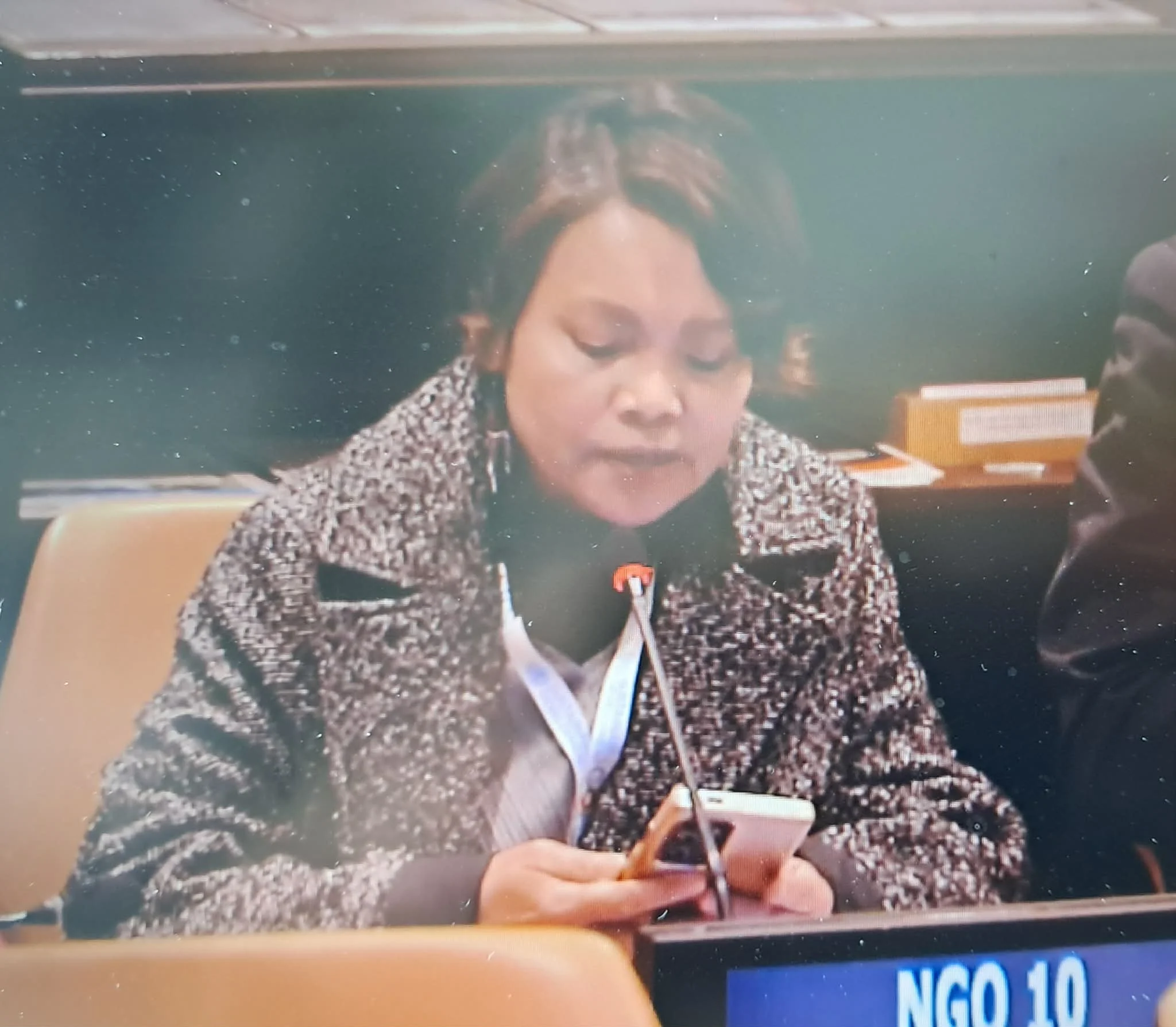
The global organization Women’s Federation for World Peace International contributed its intervention through Merly Barlaan, WFWPI Vice president and director for UN Relations Offices.
She said that there is a need to create a balance between environmental regulations and the right of local communities to engage in the economic activities that promote self-sufficiency and sustainability.
Citing a lived experience at the UNESCO Geopark Chocolate Hills in Carmen, Bohol, Barlaan focused on her hometown in the Philippines.
Protective regulations on Bohol Island has curtailed local communities to develop their own farms and businesses.
Barlaan said that environmental protection need not clash with people’s right to live sustainably. The bottom line, she said, is the institutionalization of Earth regenerative technologies and related mechanisms to ensure sustainability for Mother Nature and everyone.
“Environmental laws need to be people-centered,” she quipped.
The right to sovereignty and dissent fundamental to the right to development
The UN recognizes the right to development as an inalienable human right which every human person and all peoples are entitled to participate in, contribute to, and enjoy economic, social, cultural and political development, in which all human rights and fundamental freedoms can be fully realized.
Panelist Marian da Silva of the Columbia University School of Law highlighted the right of students to voice their opinions or dissent on social issues as a meaningful component of the right to development. Many students or labor unions have been criminalized for voicing out their opinions. “Participation in democratic processes and judicial independence are essential to development,” she argued.
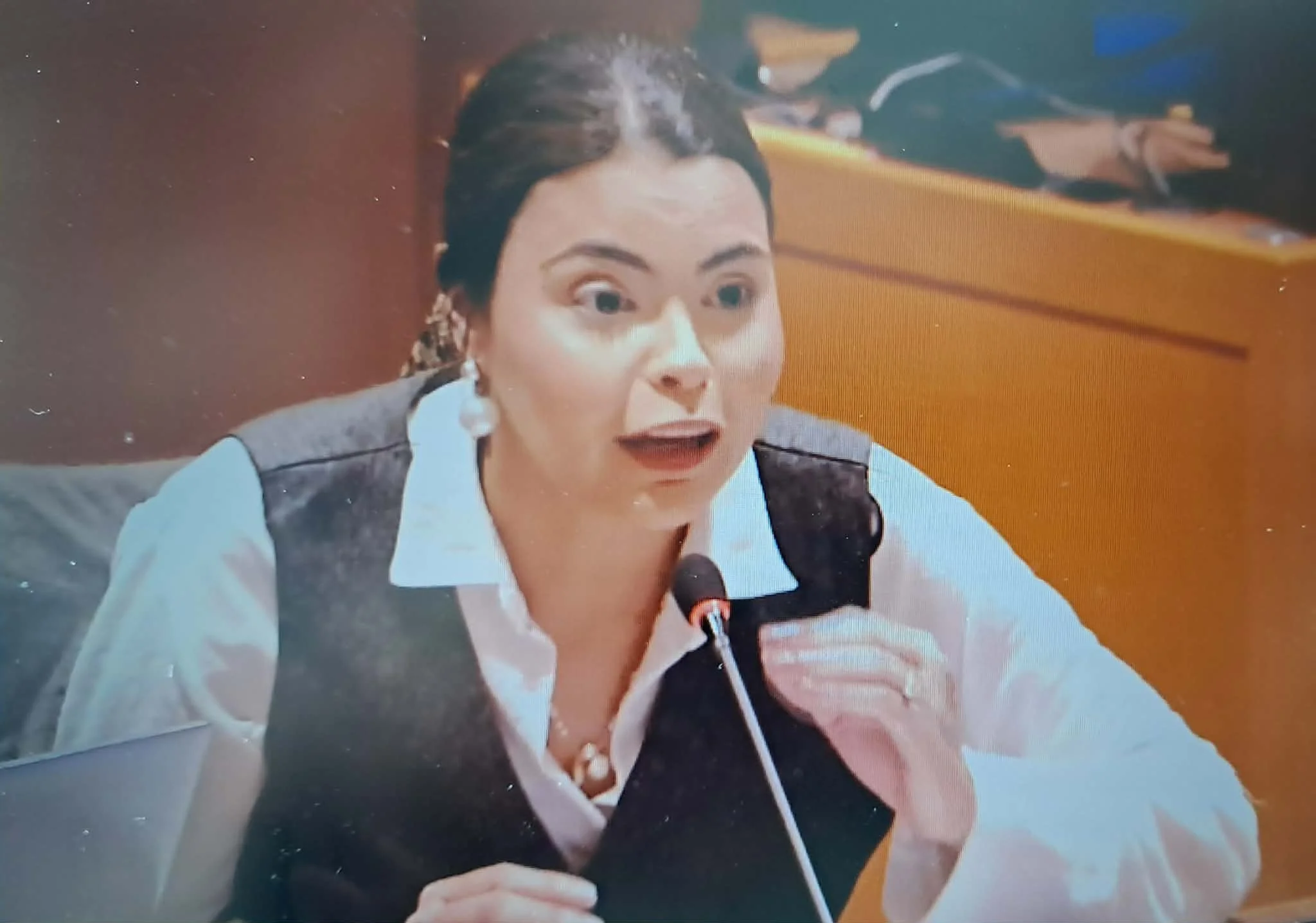
Marian da Silva of Columbia University School of Law: Criminalizing students who voice out their opinions denies democratic participation of their right to development.
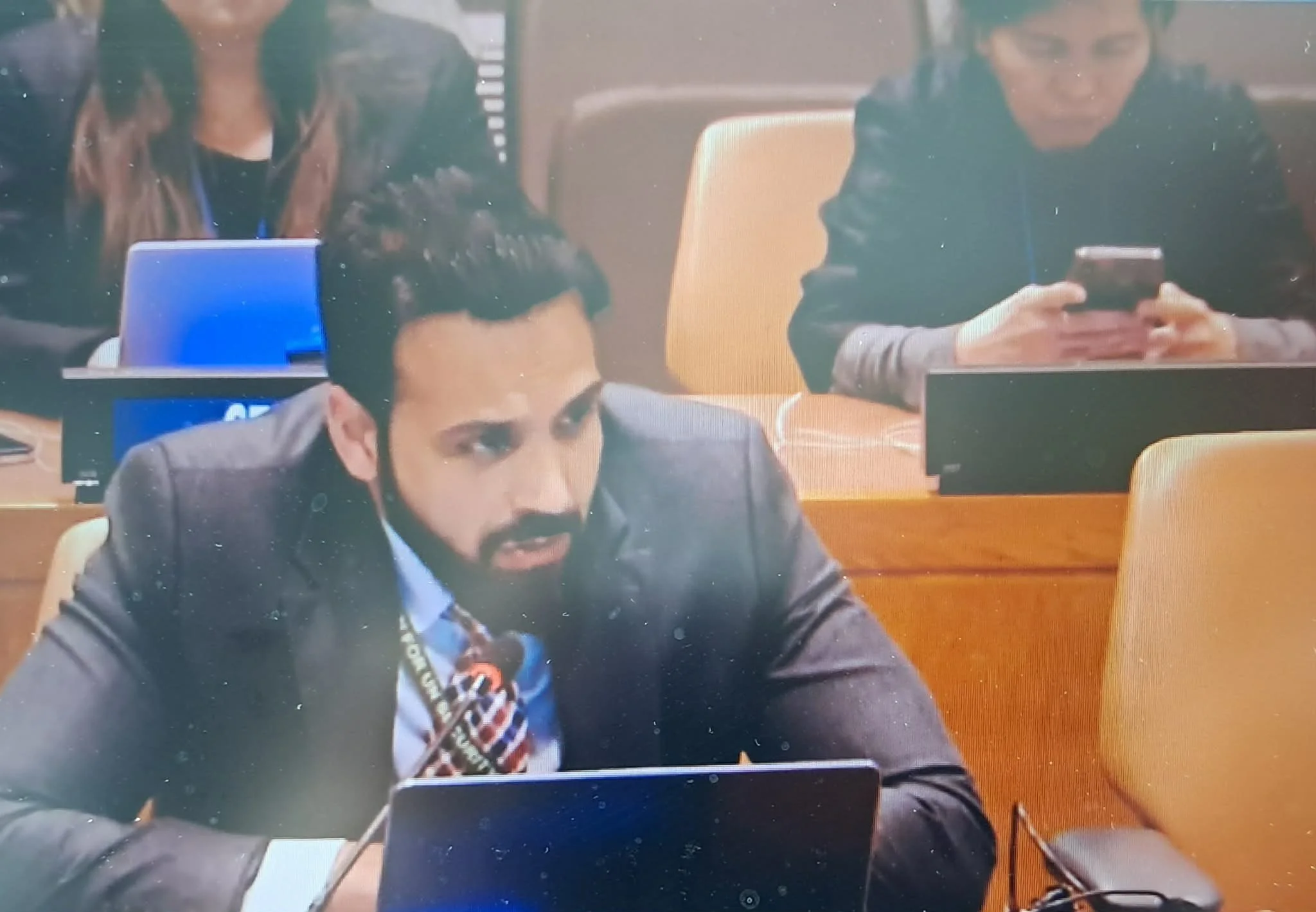
An NGO representative from Pakistan underscored the people’s right to self determination must be integrated in peacebuilding and economic reforms of member states.
An intervention from a representative of a Pakistani organization mentioned the need to create a mechanism where the right of peoples to self-determination and sovereignty are integrated in peace building and economic development of member states. He cited the cases of the people in Lebanon and the Palestinians in Gaza whose right to self-determination and freedom from occupation as most recent examples.
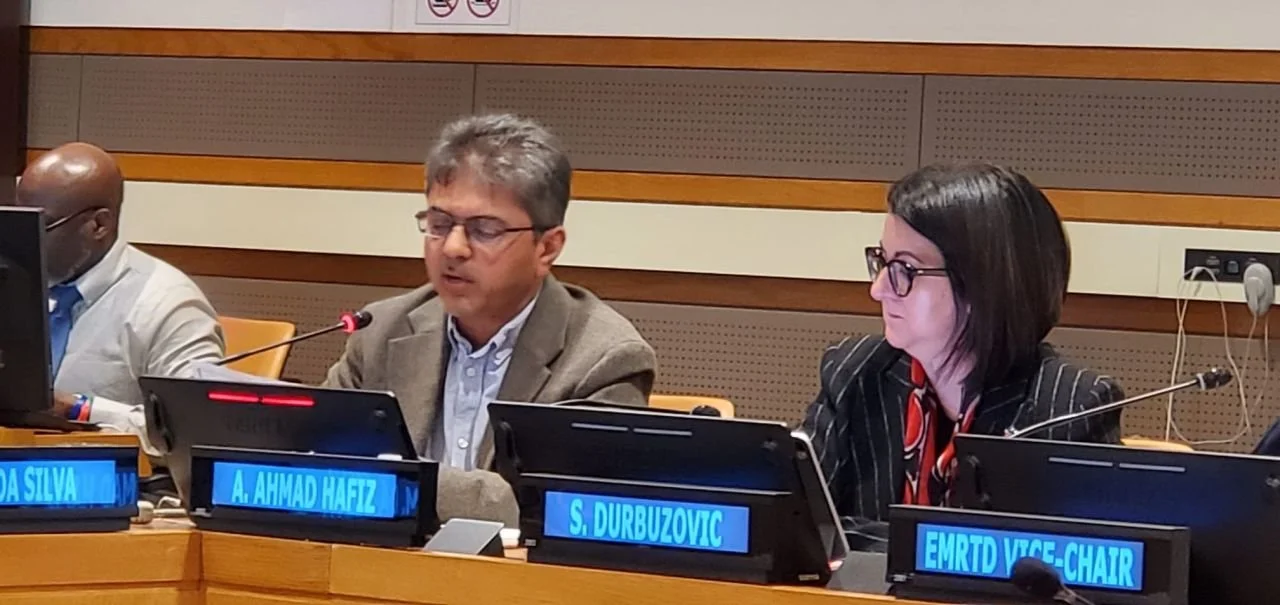
Dr. Aziz Hafiz: “The right to development compels us to shape global systems — in trade, finance, climate, and education — that empower rather than exclude.”
A moral call to action
Dr. Aziz Hafiz, chairperson of the London-based nonprofit Humanity First, said that the Right to Development is not a policy document, but a moral call to action.
“Enshrined by this United Nations, it compels us to shape global systems — in trade, finance, climate, and education — that empower rather than exclude.”
Hafiz whose humanitarian work has brought him to the war-torn Gaza, Syria,and Mosul, delivered a powerful statement.
“When whole generations in Gaza or Lebanon grow up displaced and fearful, the echo of their suffering reaches far beyond borders. Without justice, there is no peace. Without opportunity, there is no security. And without compassion, there can be no true development.
“Let us insist that peace and development walk hand in hand, that compassion guide policy, and that the right to live with dignity belongs to us all. Justice is a overarching element of our right to development.”#