By Marivir R. Montebon
New York - Women’s rights activists may have gone a long way in pushing for legislation and programs that protect victims of domestic violence – but their work is never done, until victim blaming and shaming are gone.
“Culture needs to catch up. Strong anti-VAW and VAC legislation alone are not enough to stop violence. We need to create a culture of zero tolerance for disrespect, abuse or exploitation in our homes, organizations and communities,” said Assistant Secretary Michelle Lapuz of the Philippine Department of Justice (DOJ) in an international forum on domestic violence prevention.
“We must build a culture that supports disclosure and survivors, not one that blames victims and creates a culture of silence and tolerance. We must act with urgency.”
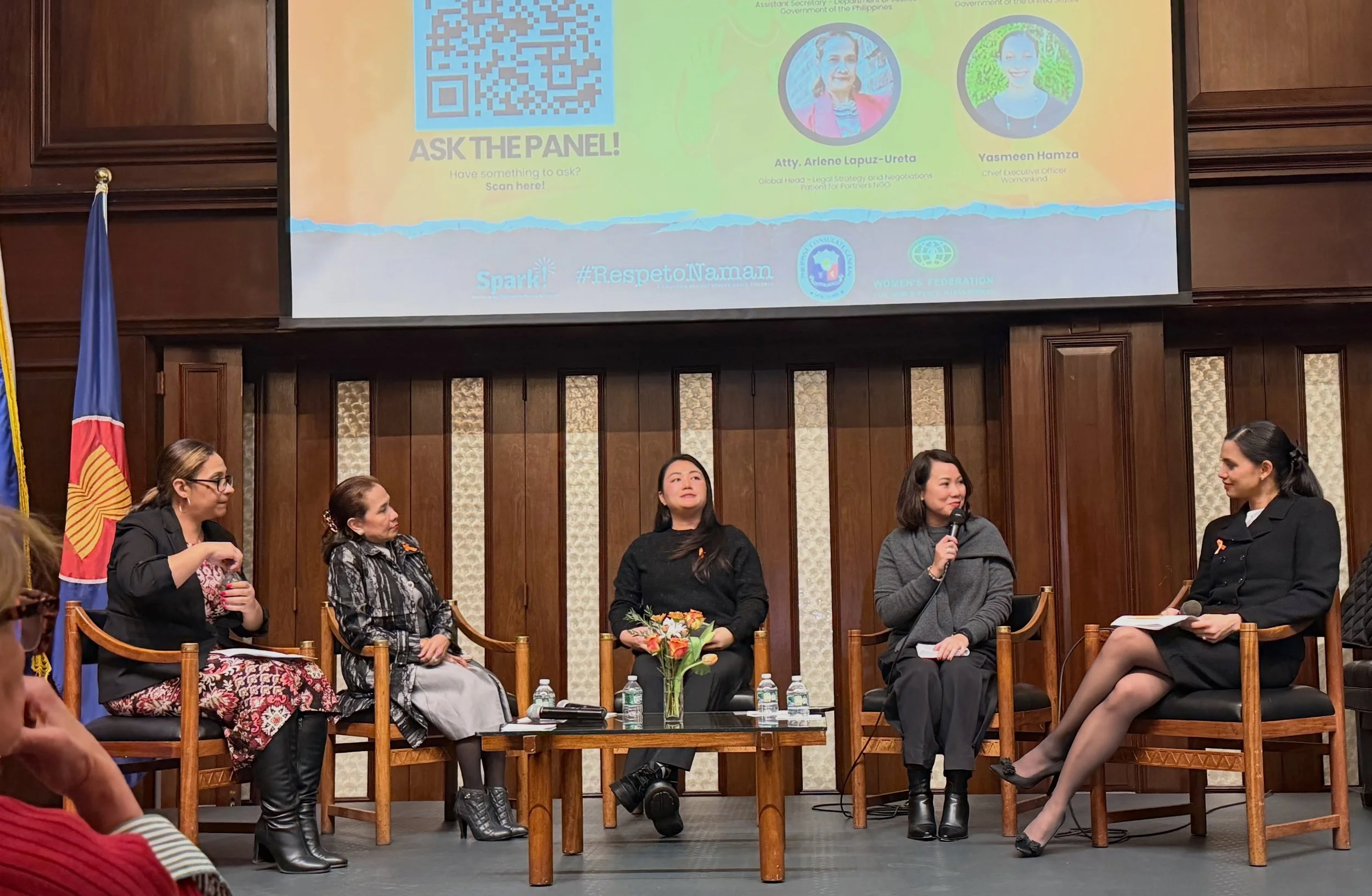
#Respetonaman panelists (l-r) Hamza, Ureta, Won, and Lapuz with moderator Patricia Astorga, Esq.
Lapuz was one of the panelists of #RespetoNaman (Please respect) #DontTellMeHowToDress, a conversation on Anti-Domestic Violence. The forum and exhibit was organized by SPARK Philippines and Philippine Consulate General in New York in partnership with Women's Federation for World Peace International, UN Office at the Philippine Center on November 16, 2026. The event was part of the UN-led campaign 16 Days of Activism against Domestic Violence.
With Lapuz were New York City Council Member Julie Won, Atty. Arlene Lapuz-Ureta of Patient for Partners NGO, and Yasmeen Hamza, Chief Executive Officer of Womankind.
The forum was moderated by Patricia Astorga, Esq. and hosted by Lora Nicolas Olaes. WFWPI Vice President and UN Relations director Merly Barrete Barlaan gave an inspirational message.
The panelists noted that continuous education and conversations on domestic violence are necessary to deconstruct culture of shame and blame on victims. Community support is key for people to have courage to speak up.
New York-based lawyer Arlene Lapuz-Ureta cited that the Philippines is among the pioneering countries which has actively advanced domestic violence protection laws such as Safe Spaces Act/Bawal Bastos Law.
But having legislation is not enough. Personal and community action are needed.
“My commitment to protecting women and children has always been deeply personal and hands-on. As President of the UP Women Lawyers’ Circle, I led legal missions for victims of VAWC — providing free legal assistance and free legal advice to those with limited access to representation. As former General Counsel of Metrobank, I handled sexual harassment cases and workplace investigations. As Head of Legal and Compliance of Nissan Philippines, I helped develop policies and training on women’s rights and the then-newly enacted Safe Spaces Act / Bawal Bastos Law. Let's keep the conversation on this important issue going — so women and children can live safe, respected, and free,” she said.
Councilwoman Won, who represents the 26th district of NYC covering Long Island City, Sunnyside, Astoria, and Woodside, encouraged people to speak up and to not be afraid, to the community to take the necessary steps for help and action.
Won is the first woman and immigrant to hold a representative position in the district's history. At the forum, she shared her own personal experience of assault that had her struggling for many years. “It takes courage to speak up. But that is where we start.”
Womankind CEO Hamza reiterated that Womankind offers holistic services in New York City on mental health, legal assistance, and shelter for women and children, regardless of race and immigration status.
She said that building trust is a key element in providing effective support to survivors. “We provide them the options to what actions to take, and give them support, on whatever they would decide on.”
Rooting out the cause of violence circles back to the culture of peace in the family and empathy (malasakit in Filipino), Consul Anna Guerra said it plainly.
“Men and boys must be part of this conversation. Prevention (of violence) begins with how we teach our children about respect, and how we conduct ourselves in our homes and workplaces, and how we respond to cases that undermine another person’s dignity. In our culture, it’s malasakit (empathy). How we listen without judgment.”
WFWPI’s Barlaan, in her inspirational speech, noted that as a mother of three girls, she worries for the safety, considering the extent of violence in the community and through social media. “My heart always prays that they are able to arrive home safely from school and work.”
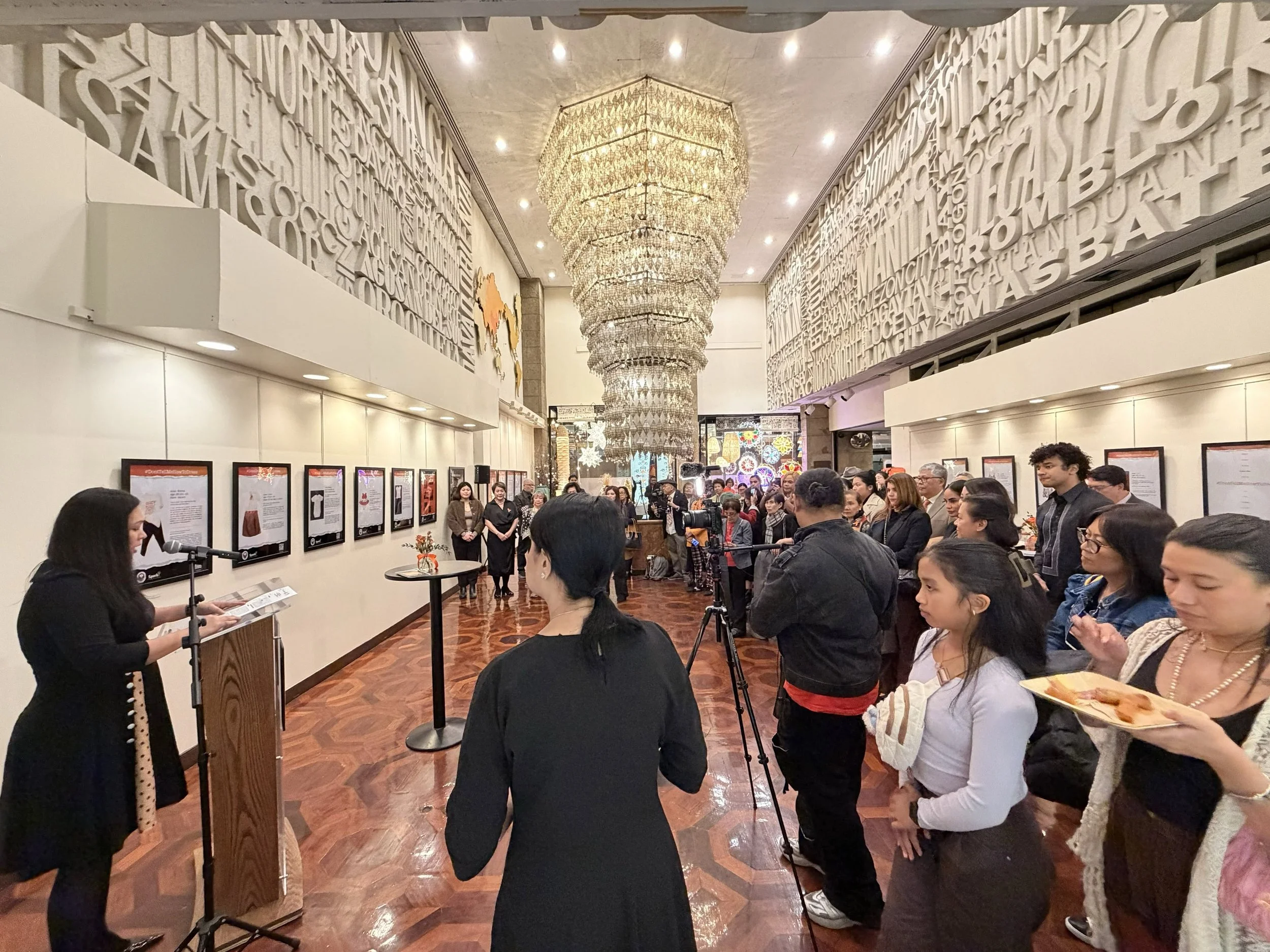
#donttellmehowtodress, an exhibit against victim blaming and shaming by organized by Spark Philippines, the Philippine Consulate General of New York, and the Women’s Federation for World Peace International.
Barlaan said that WFWPI has institutionalized peace education that starts from home, educating men and boys, instilling love, mutual respect, and women’s transformative leadership across its 128 member countries.
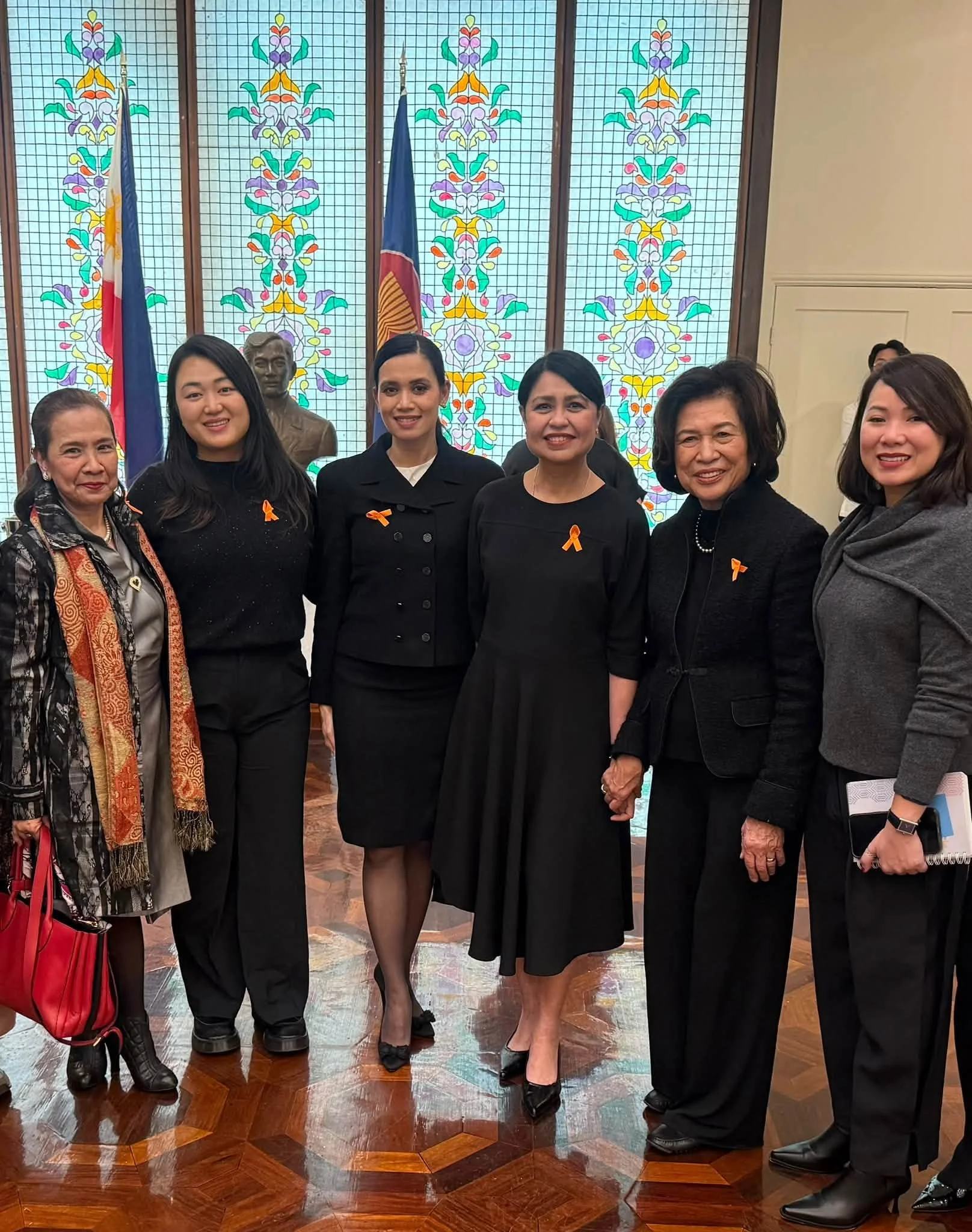
Women power (l-r): Ureta, Councilwoman Julie Won, Atty. Astorga, Loida Nicolas Lewis, and ASec. Lapuz.
Spark Philippines executive director Maica Teves shared that her nonprofit organization added the campaign on anti-gender-based domestic violence as part of its advocacy, because its mission for women’s economic empowerment rests on the opportunities and respect accorded them.
The #DontTellMeHowToDress exhibit was formally opened before the forum, featuring the clothes worn by women at the time of their assault. Heading the launch were Loida Nicolas Lewis, Officer-in-charge Consul Chico Borromeo, Consul Guerra, Teves, and Board member Mel Alonzo of Spark Philippines.#