Essay - The Diplomat and the Memoirist: Decades of global diplomacy taught me to write my memoir
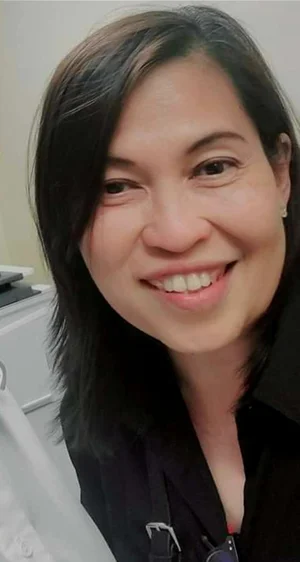
By Maan Samson
What does a seasoned diplomat have to teach someone writing a memoir? As it turns out, absolutely everything.
During our recent masterclass, we had the distinct privilege of listening to Ambassador Mario de Leon Jr. With a rich and expansive career that spans serving as the Consul General in New York, completing diplomatic tours in Africa and the European Union, acting as a UN representative for women, and serving as a senior advisor for diplomacy, Ambassador de Leon has seen the world through a lens few are privy to.
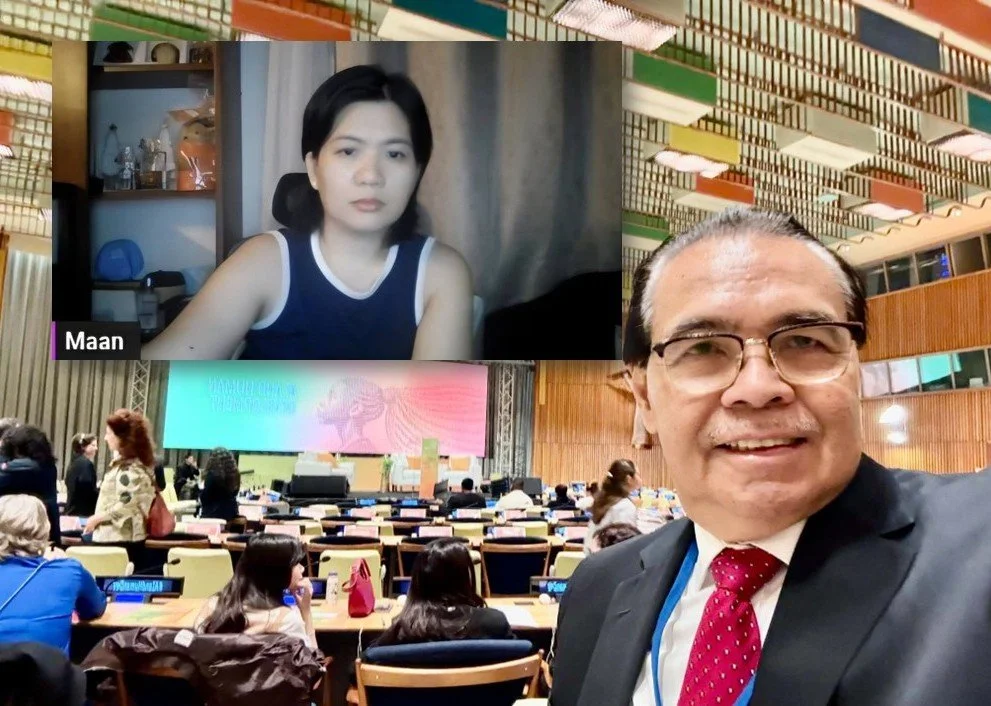
Retired Philippine Ambassador Mario de Leon Jr. at a UN General Assembly Conference on AI, he spoke on diplomacy and relating with journalists during the Writing and Journalism Masterclass; Inset: Masterclass cohort and writer Maan Samson.
Yet, as he spoke about "Public Diplomacy" and the rigorous reports ambassadors must draft for the Department of Foreign Affairs, I was struck by a beautiful realization. The practices of a top-tier diplomat are intimately intertwined with the disciplines of a dedicated writer and journalist.
As I navigate the deeply personal and often overwhelming process of writing my memoir, Ambassador de Leon’s lecture resonated with me profoundly. He shared specific practices for diplomats in reporting, and every single one felt like a masterclass in storytelling. Here is how his diplomatic wisdom is reshaping my approach to writing:
1. The power of the pause: Listen before you speak
Ambassador de Leon emphasized that even in casual conversation, one must listen before speaking. You must truly understand what a person is saying before you ask a question. In journalism, this is how you uncover the real story. In memoir writing, it means learning to actively "listen" to my own past, my memories, and the people who shaped my life, rather than rushing to speak over them with my present-day biases.
2. The physiological magic of notetaking
When discussing multilateral and bilateral meetings at the UN, the Ambassador stressed the importance of taking notes manually. He explained that writing things down has a physiological effect—it makes the information stick in your mind. As a writer, this validates the messy, beautiful process of journaling. Whether I am researching background information or capturing a fleeting memory, putting pen to paper is what anchors the narrative into my consciousness.
3. Developing a "mental box" and taking the long view
One of the most fascinating concepts he shared was developing a "mental box" to stay on top of imminent issues. He advised taking the "long view," noting that details which appear unobvious or insignificant at first may become incredibly important later. This is the exact architecture of a good memoir! The small, seemingly mundane details of my life—the quiet moments, the overlooked conversations—are the very threads that weave the larger tapestry of my story.
4. The UN corridor diplomacy: Know something about anything
To master an issue, the Ambassador noted, you must be a wide reader. You must "know something about anything" just to engage effectively in what he called "UN corridor diplomacy." As a writer, reading widely is our lifeblood. It expands our vocabulary, our empathy, and our worldview, allowing us to connect with readers from all walks of life.
5. Separating observation from judgment
Perhaps the most crucial lesson for me was his directive to rigorously separate three things: what you have observed, your analysis, and your judgment. In diplomatic reporting, blurring these lines can cause international incidents. In memoir writing, blurring them robs the reader of their own experience. The Ambassador reminded me that my first job is to be an accurate witness to my own life. I must describe the scene (observation) before I tell the reader what it means (analysis) or how to feel about it (judgment).
My takeaway
Diplomacy, much like journalism, relies heavily on discipline, finding the right witness, and honing your people skills.
Listening to Ambassador de Leon Jr. didn't just give me a glimpse into the high-stakes world of the United Nations; it held a mirror up to my own writing journey. It reminded me that whether you are drafting a critical report for the Department of Foreign Affairs or penning a deeply personal chapter of a memoir, the goal is the same: to seek the truth, capture the vital details, and communicate with profound empathy and clarity. #
(About the writer: Maan Samson is a Case Manager at Ing Makababaying Aksyon (IMA) Foundation, Inc. in Angeles City, Pampanga, Philippines. She is currently working to publish her memoir. She is a continuing cohort of the Masterclass in Writing and Journalism with Dr. Marivir Montebon in New York City under the auspices of Awesome Media Ltd. and Women’s Immigration & Communications Cafe.)