Essay: Reclaiming the value of land in our lives
AGREE or THIS AGRI
By Dr. Vanette Colmenares
Cebu - The Tabo sa Dumanjug Agri Fair, which opened on September 25, 2026, as part of the week-long fiesta celebration ending on October 4, is an event I always look forward to attending.
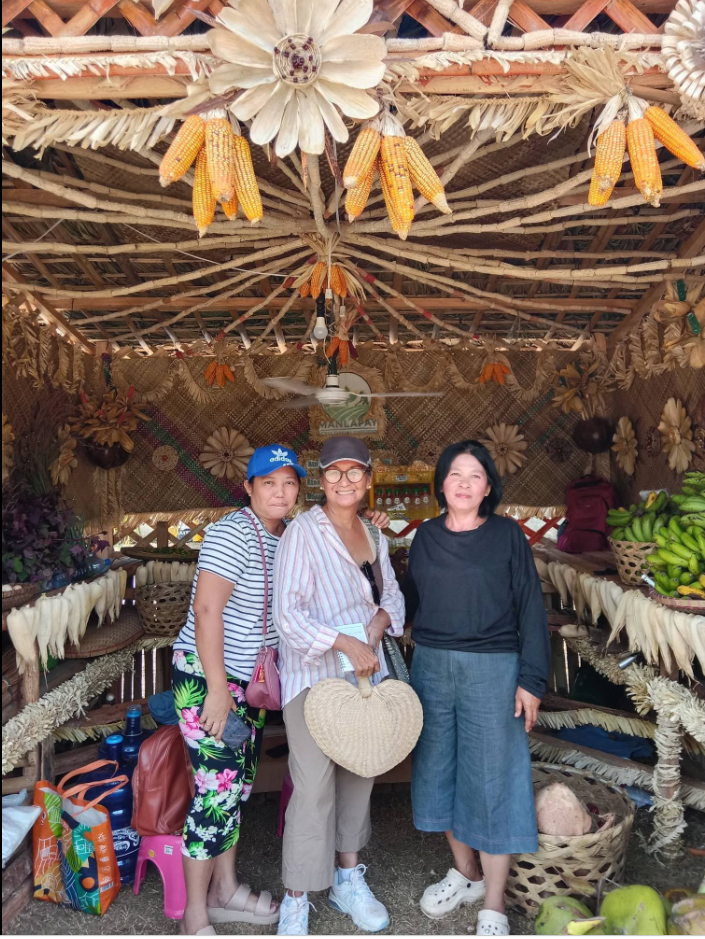
At the Tabo (market) sa Dumanjug with two newly found friends. On the ground, women are leading the path of sustainable agriculture.
Before the launch, I met Gunya, a barangay tanod from Liong, who owns a small half-hectare farm where her family grows ampalaya, cucumber, and primarily watermelon. What surprised me most was that a single crop cycle of about six weeks, from planting to harvest, earned her roughly five times what a call center agent would make over the same period.
Production costs were relatively low, estimated at only a quarter of a call center agent’s monthly salary (about Php 15-25K). While farming does require hard work during planting and harvesting, the days in between are mostly spent watering crops and monitoring for pests. Much of the remaining time can be used to relax, like resting in a hammock to cool off during the summer heat, or pursuing other income-generating activities.
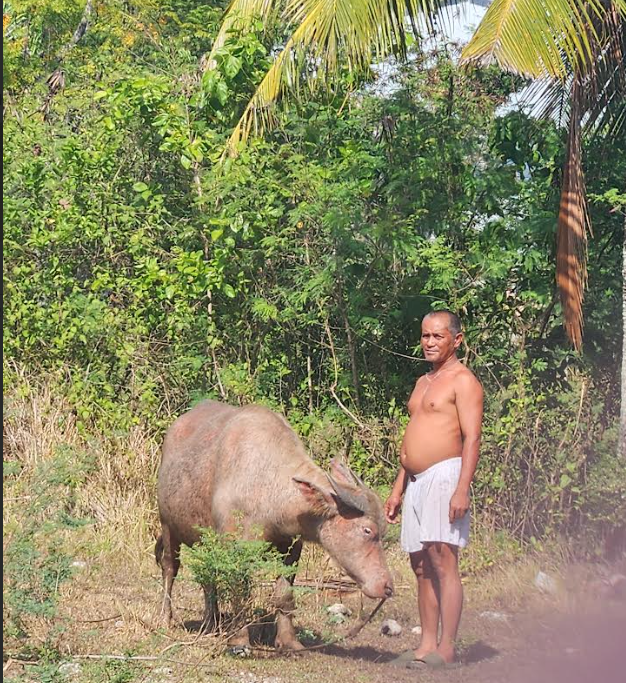
For Edwin, our enkargado, the carabao (water buffalo) remains his reliable friend.
Mang Wennie, a former tenant, exemplifies hard work, entrepreneurship, and adaptability. By combining farming with e-bike driving, he has created multiple sources of income for the productive use of his time. In recognition of his years of loyal service, we provided him with a portion of land, and he later expanded by acquiring a neighboring property through installments. With our assistance, he also transitioned from using a carabao to a mechanical tiller, a loan he faithfully repaid. His story reflects perseverance, responsible stewardship, and a willingness to embrace innovation.
During a family gathering, I overheard a friendly debate between Mang Wennie and Edwin, our enkargado. Having adopted a mechanical tiller, Mang Wennie argued that maintaining a carabao was costly and labor-intensive. Edwin countered that machines are vulnerable to breakdowns and rising fuel costs, while a carabao remains a reliable farming partner. Their exchange highlighted an enduring lesson in agriculture: progress often lies in balancing the efficiency of technology with the resilience of traditional methods
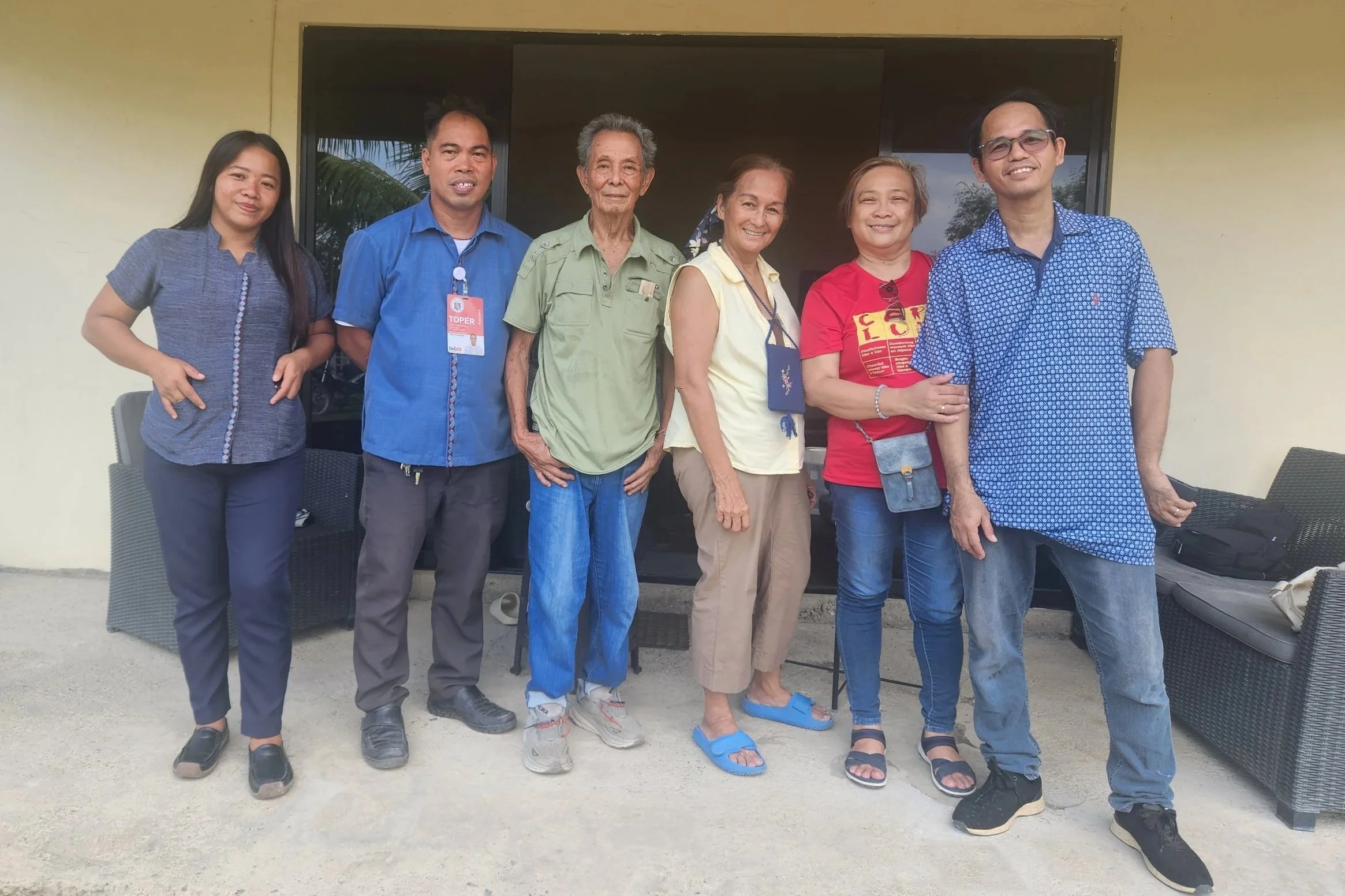
My sustainability team with Mr. Dablos (2nd from left).
During a recent meeting with Mr. Dablos, an agriculture teacher collaborating with Dumanjug National High School, we discussed possible ways to support their school’s agricultural projects. As we talked, he noticed Edwin plowing a field with his carabao and immediately became interested. He asked whether his students could experience working with the carabao firsthand, believing that understanding traditional farming practices would help them better appreciate how technological advances have transformed agriculture, increasing productivity while reducing labor and time. (The municipality gave the school 3 tillers to practice on).
Mr. Dablos may not be a farmer by trade, but he shares the same respect for the land. As an educator, he serves as a bridge between knowledge and experience, helping students appreciate agriculture not only as a subject to study but as a way of life.
The ongoing Tabo sa Dumanjug revealed how much the local agricultural landscape has evolved over the years. What was once primarily a marketplace has become a gathering place for farmers, entrepreneurs, cooperatives, and community organizations. They communed around common needs and aspirations that assist in their livelihood, which is beyond just cultivating land but also the buying and selling of its produce. What stood out most was the prominent role of women, many of whom have led agricultural associations and livelihood groups, reflecting their growing leadership role in community development.
One parent shared that she discouraged her daughter's interest in agriculture, believing that opportunities abroad offered a better path out of poverty. While I understood her concern, I viewed it differently. Agriculture is often underestimated, not only because of economic realities but also because of changing aspirations.
In an age of instant gratification, many young people are drawn to careers that promise quicker rewards and higher status. Working with one's hands in the field is often seen as less desirable than working with one's fingers on a computer. Yet farming remains a profession that requires patience, creativity, resilience, and purpose, qualities that are increasingly difficult to cultivate in a world that values speed above all else.
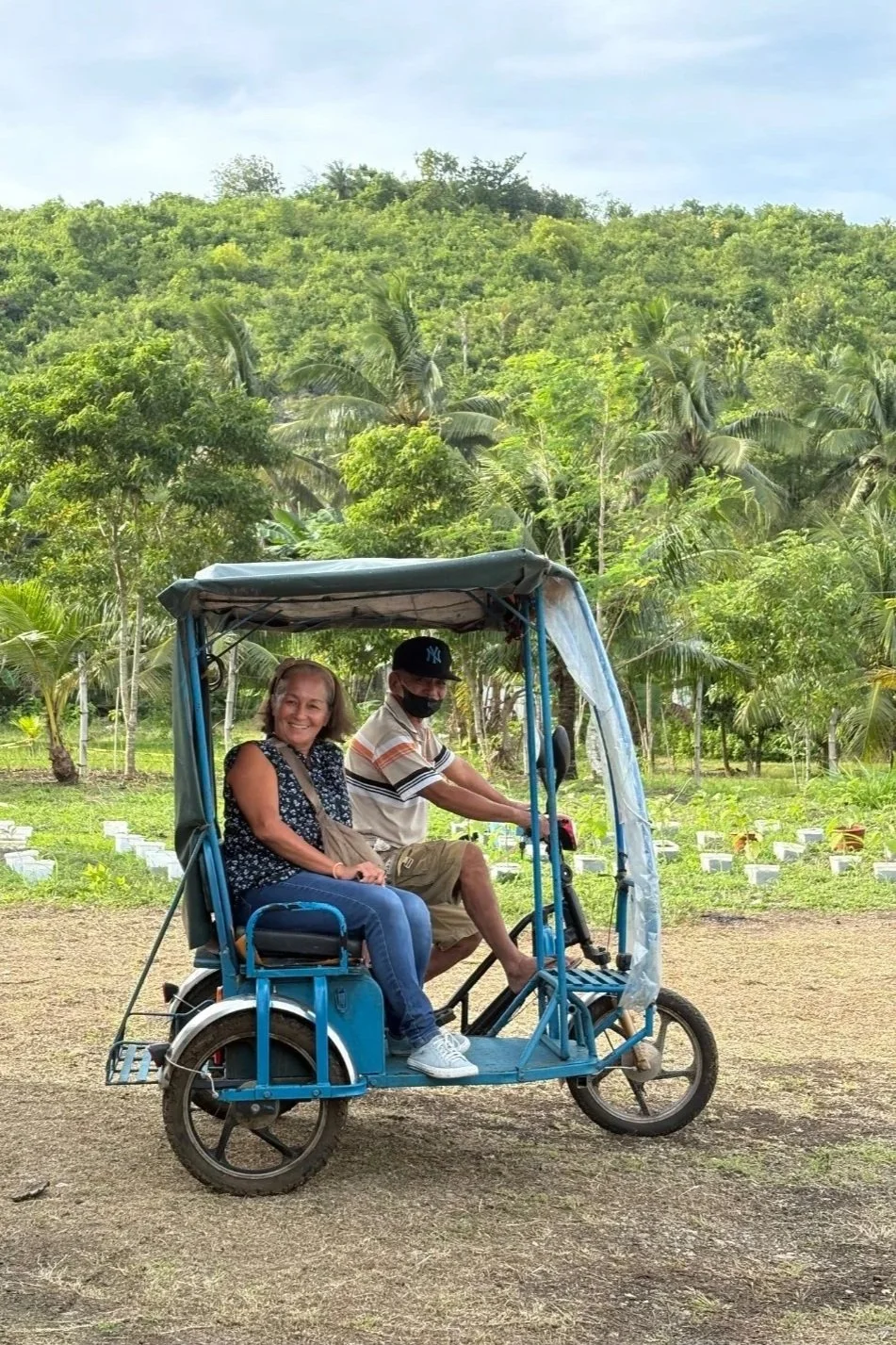
Enjoying the sustainable living journey. On board the trisikad owned and operated by my suki Wennie.
Perhaps what needs reviving is not only agriculture, but our understanding of value itself. In a world driven by instant gratification and the demands of the times, we are often taught to seek success quickly rather than meaning deeply. The real question is not how fast we can get somewhere, but whether the journey leads to a life of purpose. After all, fulfillment is seldom found in the pursuit of immediate rewards, but in dedicating ourselves to something greater than ourselves and leaving a legacy for those who follow.
In January next year, the global women’s organization WFWPI* will co-host a summit along with the Dumanjug municipality dedicated to raising awareness of issues that affect not only our municipality, but also our nation and the wider global community. Guided by the principles of regenerative farming and women's empowerment, the summit seeks not only to educate, but also to inspire people to rediscover the values of stewardship, community, and responsible living. In a world driven by rapid change, it hopes to remind us that true progress is measured not only by what we gain, but by what we preserve for future generations. #
(About the writer: Dr. Vanette Colmenares, a practitioner of sustainability, is native of Dumanjug and struts the Philippines and the US as a global citizen. She has a doctoral degree in Peace and Public Leadership from the HJI Graduate School for Peace and Public Leadership in New York City. She’s a *Women’s Federation for World Peace International’s ambassador for peace, focusing her leadership on regenerating her lands using principles of sustainable living and social justice.)