By Marivir R. Montebon
This essay is my final test for my certificate on "Citizen Politics in America: Public Opinion, Elections, Interest Groups, and the Media” from Harvard University in August 2025. It is timely to share this, now that discussion is on - whether Congress should structurally change the US electoral system.
New York – In the US electoral vote, each state gets electoral votes equal to its number of senators (2) plus the number of representatives (based on population) which means there are 538 electoral votes nationwide.
Article II of the Constitution grants the power to elect the president and vice president to the states through the Electoral College system. The founders used this system to prevent the tyranny of the majority in elections, ensuring that small states have an equal voice in presidential elections. The Electoral College was created to uphold federalism, dividing power between state and national governments.
In the electoral college, a presidential candidate must win at least 270 to become president. Except for Maine and Nebraska which allow a split allocation by congressional district, the 48 states and Washington, DC, go for the winner of the state’s popular vote (winner-take-all system).
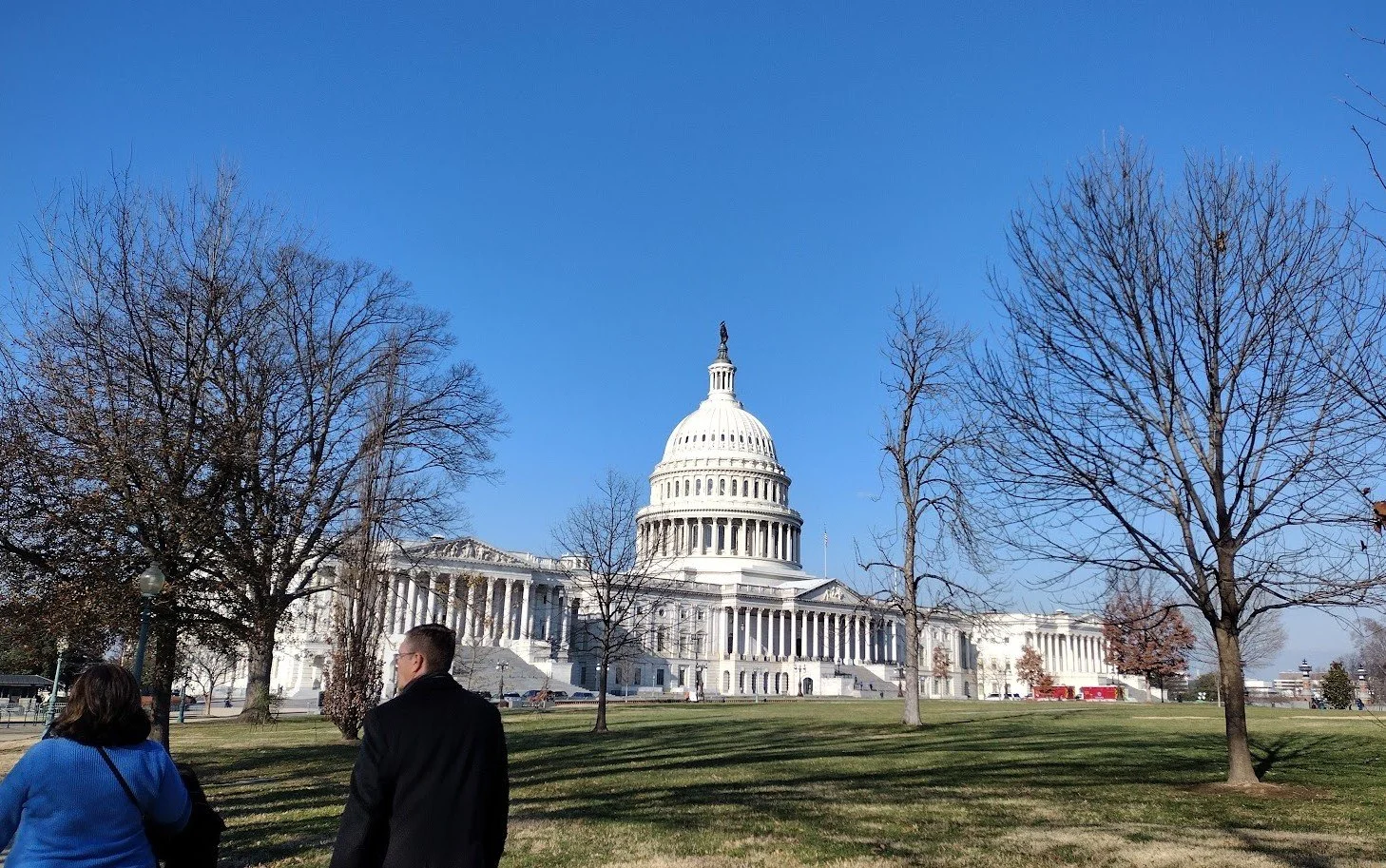
Because of this winner-takes-all-system, the candidates focus their campaign on 'battleground states' and more often ignore the 'safe states.'
A blunder of this system is that a nationally popular candidate can ultimately lose in the electoral vote which gives the ultimate decision on who the top two executives of the country will be.
I believe that the US must change the electoral vote to direct voting; counting individual votes and not adding the layer of the electoral vote, to ensure representative democracy.
The Electoral College is a filter of democracy, I should say, and an easy structure to be manipulated by big and rich interest groups.
Are interest groups stronger than political parties?
Interest groups in the US are more influential than political parties in creating or reforming public policy. Political parties actually derive their strength from the numbers and money of interest groups.
Interest groups like the NRA, labor unions, environmental groups, justice seekers, immigrant organizations, and business organizations shape and dictate the agenda of political parties, depending on their resources to sustain campaigns and talk to politicians.
Hence, the agenda of political parties is largely determined by the interest of these rich or popular groups. Interest groups can either collaborate or contradict political parties or political leaders which add up or diminish the power of their political office.
“Interest groups are also known as advocacy groups or pressure groups that seek to influence public policy and decision-making. These groups often focus on specific issues or causes, and vary in size, scope, and influence, but they all share a common goal of advocating for policies that align with their interests and ideologies. Unlike political parties, interest groups do not aim to win elections or govern. Instead, they function by lobbying legislators, engaging in public campaigns, conducting research, and mobilizing members to advocate for change. By providing expertise, resources, and a unified voice, interest groups aim to sway public officials and policymakers to support their positions.
Unlike interest groups, political parties cover a broad spectrum of issues and represent a wider constituency, striving to garner electoral support from the general population. They aim to achieve legislative majorities to implement their policy agendas, engage in political debates, and govern effectively.” (https://socialstudieshelp.com/ap-government-and-politics/interest-groups-vs-political-parties-whats-the-difference/)
The Political Action Committees
Interestingly, political action committees (PACs) have emerged to be powerful influencers of political parties. They created an impact on the American party system in the mid-twentieth century. Today, the Super PACs are even more influential, looming largely on legislation and programs.
Emily Charnock, writer of “The Rise of Political Action Committees: Interest Group Electioneering and the Transformation of American Politics” posits that PACs were envisaged intentionally as “tools for effecting ideological change in the two main parties, thus helping to foster the partisan polarization we see today.”
She wrote: “The first PAC, created by the Congress of Industrial Organizations (CIO) in 1943, explicitly aimed to liberalize the Democratic Party by channeling campaign resources to liberal Democrats while trying to defeat conservative Southern Democrats. This organizational model and strategy of “dynamic partisanship” subsequently diffused through the interest group world—imitated first by other labor and liberal allies in the 1940s and 1950s, then adopted and inverted by business and conservative groups in the late 1950s and early 1960s.
Previously committed to the “conservative coalition” of Southern Democrats and northern Republicans, the latter groups came to embrace a more partisan approach and created new PACs to help refashion the Republican Party into a conservative counterweight.” The Rise of Political Action Committees: Interest Group Electioneering and the Transformation of American Politics | Oxford Academic
I believe that for sustainability and sensibility of political progress, political parties must listen and reflect the interest of the people, not on Super PACs whose interests are mainly for monopoly of power and profit.
Political parties, after all, must represent the interest of their constituents in creating policies and programs that are beneficial to them and the larger society. It’s money that talks to US politics, while a growing people’s movement is pushing on the other.
With this, my position stays that the Electoral College must be abolished because it is the structure that the elitist PACS and Super PACS could easily manipulate. #